Robust Phase-to-Record Conversion with Retained Loss Outputs
Sharp protection against imperfect controlled-path matching
Sharp protection against imperfect controlled-path matching
Physical model and a certificate weaker than exact matching
The transmitted input path is a two-mode one-excitation register. The original apparatus stock is independent of that register and any inert source reference. After purification, let the actual cell obey

Searchable transcription
|i⟩|ready⟩↦−→|i⟩|vi⟩,
∥vi∥= 1,
i = 0, 1.
The path is preserved; all port, controller and bath variables belong to . This allows path-dependent coherent interactions and marking, but not arbitrary path exchange. Let
 be the common conclusive port and
 its complete inconclusive complement, including surviving source and all lost outputs. Only the terminal + and
 flags supply decisions; the complementary path, bath and original reference are retained but unread. In this solvable class the two actual efficiencies remain equal:

Searchable transcription
∥PF v0∥2 = ∥PF v1∥2 = η,
0 < ηL ≤η ≤ηU ≤1.

Searchable transcription
Equal efficiencies do not imply equal apparatus states or phase. Write fi = PF vi/√η, and admit the
full-response certificate
Re⟨v0, v1⟩≥γ = cos Θ,
0 ≤Θ ≤π.
(43)
Searchable transcription
It is a real overlap in a calibrated relative-phase convention, not an absolute fidelity: |⟨v0, v1⟩| = 1
alone permits an unknown relative phase of π and cannot protect this reader. The certificate is a
physical premise or an independently justified calibration result. Reading all lost ports to estimate it
would require additional coherent access, not granted by retaining them.
A sufficient microscopic consumer uses two controlled-path Hamiltonians Hi(t) on the same finite
dilation, with a common initial stock and
∫︁∥H0−H1∥∞dt/ħ≤b. Duhamel’s identity gives ∥v0−v1∥≤b,
hence Re⟨v0, v1⟩≥1 −b2/2. It requires a bound on the actual full dilation difference; equal averaged
decay rates do not establish it. Sharpness below is for the declared Gram class, not for every Hamiltonian
norm ball. The common conversion and uniform loss model can supply ηL when its own hypotheses
still hold. Otherwise ηL needs a new certificate.
Sharp postselected overlap and phase response
Put . Orthogonality of the port sectors gives

Searchable transcription
Re⟨v0, v1⟩= η Re χ + Re⟨PNv0, PNv1⟩≤η Re χ + 1 −η.

Searchable transcription
Thus
|χ| ≤1,
Re χ ≥k(η) := 1 −1 −γ
η
.
(44)
When 1 the latter supplies no additional restriction. This is exact: any point in the intersection of that disk and half-plane can be completed by normalized null vectors having a suitable real overlap, whenever the global inequality requires it. For
 1, the boundary used in the positive-contrast optimization below has

Searchable transcription
v0 = √η|F⟩+
√︁
1 −η|N⟩,
v1 = √ηeiα|F⟩+
√︁
1 −η|N⟩,
cos α = k(η).
It saturates the global certificate in that domain. A conventional common conversion pulse followed by the controlled flag-only Hamiltonian for duration
 0 realizes it. Its finite action and timing are declared; there is no claim of a free or instantaneous phase pulse. This uses the same two paths and two ready/flag ports, plus the common-conversion filter-failure port. Null/loss amplitudes are retained, not renormalized away. Let the source family have population
 ], visibility
 1], with 0
 1, and relative phase
 ∆. For
 ) satisfying

Searchable transcription
kL > sin ∆,
0 ≤∆< π/2,
(45)
the exact least real conclusive contrast is

Searchable transcription
[︃
kL cos ∆−
√︂
1 −k2
L sin ∆
]︃
= vL cos(arccos kL + ∆) ≥0.
(46)
m = vL

Searchable transcription
It is strictly positive when vL > 0. If vL = 0, no correctly labelled reader in this family with positive
guaranteed conclusive probability can guarantee conditional error below one half. Indeed, for fixed phase
the minimizing unit-disk point is χ = kL + i
√︂

Searchable transcription
1 −k2
L, with adverse phase sign; increasing η increases k
and improves the contrast. The minimum over δ is at an endpoint. Visibility is worst at vL in the
positive regime. The explicit phase-marking dilation above attains every stated minimum. Outside
this regime the minimum is cos[min{π, arccos(max{−1, kL}) + ∆}] before visibility minimization. A
negative contrast cannot certify the present correctly labelled reader below one-half error; it is not silently clipped positive. The limiting cases expose the operational gain. At Θ = 0 the general-POVM matched-reader contrast is recovered. At = 1 the phase budget is the ordinary sum Θ + ∆. At fixed nonzero Θ and decreasing efficiency, conditioning eventually destroys the positive-contrast guarantee. This is a quantified consequence of mismatch concentrated in rare flag events, not an additive generic channel-error estimate.
Exactly optimal filter with bounded calibration error

Searchable transcription
Place the same entrance filter before the cell. Its actual transmitted matrix is F = diag(reu, 1), where
the chosen nominal r > 0 has fixed unknown log-gain error |u| ≤u0, with u0 ≥0, and r ≤e−u0.
Its phase error is charged to ∆; failure remains an orthogonal retained flag. These are amplitude
constraints on the actual passive prefix, not a statistical independence assumption between errors. The
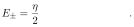
conclusive effects are
(︄
r2e2u
±reuχ
±reu  ̄χ
1
)︄
Searchable transcription
E± = η
.
2
The complex conjugation convention is immaterial to the symmetric phase set. For either label the conditional wrong probability is

Searchable transcription
[︄
1 −2reuv
√︁
p(1 −p) Re(χeiδ)
pr2e2u + 1 −p
]︄
ε(p, u, η, χ, δ, v) = 1
.
2
Thus it depends on the normalized apparatus overlap as well as path counts.

Searchable transcription
Theorem 5.1 (Sharp Gram-robust filter frontier). Assume Eq. (45), 0 < pL ≤pU < 1 and an admitted
error ceiling 0 ≤ε < 1/2. Put ξL =
√︁
pL/(1 −pL), ξU =
√︁
 , no positive conclusive reader in this subclass meets the ceiling. Otherwise define

Searchable transcription
h = arcosh
m
1 −2ε,
L = −h −log ξL + u0,
U = h −log ξU −u0.

Searchable transcription
A feasible filter exists precisely when L ≤min{U, −u0}. Its maximin conclusive probability is attained
at
r∗= exp min{U, −u0},
Q∗= ηL[1 −pU + pUr2
∗e−2u0].
(47)
The optimum is among these calibrated attenuate-mode-zero filters and controlled-path cells with the stated Gram and efficiency uncertainty. It is not an unrestricted optical-control optimum.
Proof. The exact worst contrast is . With
 log
 log
 ), the conditional error is (1

 sech
 2. Its ceiling is equivalent to
 for every
 , giving
 log
 . Passivity gives the additional cap. At fixed
 the original-population success is
 ], minimized at
 ; it increases with
 . This proves the displayed choice and rate. The worst error and worst success can occur at different admitted parameters; each is an individually attained uniform guarantee. The explicit port vectors establish physical attainment of the error bound, and no null or prefix-failure outcome is postselected away.
Exact admitted mismatch threshold. There is a closed symmetry-breaking tolerance when the balancing filter is passive. Assume , and put

Searchable transcription
2 log(ξU/ξL) + u0,
cε = (1 −2ε) cosh W
W = 1
vL
.
For 0 cos ∆, define
 arccos
 ∆
 0. A positive-rate filter meeting the error ceiling exists exactly when Θ
 Θ
 := arccos [1
 cos
![φ)] .](/publications/source-readout/constructive/phase-to-record-conversion/math/p018-00422.svg) (48)
To prove it, the largest absolute log-ratio over the uncertain source and gain interval has minimum  , attained by
 ; passivity does not obstruct it by assumption. Thus feasibility is exactly

 cosh
 Insert Eq. (46) and invert cosine on its positive branch. At the boundary the admissible filter interval collapses to the balancing choice. If
 cos ∆, no mismatch budget is feasible, including zero. If
 = 0 this positive-error-ceiling theorem is not used. For the worked example below, Θ
 1001806624 radians, about 5
 . This threshold applies to the full-response Gram budget; it is not the same numerical budget as a microscopic detuning angle.
An exact pointer/reference distance, distinct from full output
At fixed actual and
 , compare with the matched reader
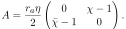
 = 1 having the same filter and efficiency. The aggregate inconclusive pointer effect, summing filter failure, loss and surviving-ready outcomes, is identical. These sectors are coarsened only for the present pointer/reference comparison; their separate retained quantum outputs need not agree. The two conclusive effect differences are
 and
 , where
Searchable transcription
(︄
0
χ −1
 ̄χ −1
0
)︄
A = raη
.
2
For the nominated classical pointer channels, including an arbitrary inert reference,

Searchable transcription
2 |χ −1| ≤ra√η
1
2∥Mχ −M1∥⋄= ∥A∥∞= raη
2
d,
d =
√︂
2(1 −γ).
(49)
In the positive regime the last bound is sharp for the phase-marking vectors. To prove the reference-uniform upper bound, trace-norm duality gives Tr
 ; the two classical blocks have opposite signs. An eigenvector input of
 attains equality. Finally
 Re
 proves the last inequality. This certifies pointer plus reference, not the surviving source, full bath, unknown controller state or equality of their purified outputs. Retaining those outputs does not grant permission to read them.