Certification Resources and the Value of Retained Quantum-Reader Records
Readable trajectories can reduce certification stock under a declared response model
Readable trajectories can reduce certification stock under a declared response model
The terminal-score information floor is not a universal calibration floor. We construct a full-record test and compare it with every terminal-score-only test within the same physical family, rather than charging the latter for four unrelated label risks. This supplies a substantial attainable resource separation while making the additional model promise explicit.
One common physical and preparation contract
Freeze the shipped fourteen-copy DAG and its fresh two-bit uniform root symmetrization. The device has known 5 and one fixed unknown visibility
 1]. Every commanded rational direction
 ) has the promised response

Searchable transcription
Kv(o | h, c, s) = η
2(1 + ovxh),
o = ±1,
Kv(0 | h, c, s) = 1 −η,
where , with the recorded root transformation applied. This shared sinusoidal law, trusted commands, independent fresh source copies conditional on one fixed hidden label, independent fresh detector stock and stability between calibration and deployment are explicit premises. A reset does not prove them. The evaluator can prepare one nominated trusted label (for example
 +), hidden from the reader, and knows it for scoring and likelihood evaluation. Calibration consumes the actual complete fourteen-trial experiments, including all nulls. Under the response promise, fresh root symmetry equalizes all four label risks to one function
 the mean of the four base-DAG risks. This does not assert that four risks are equal for an arbitrary device. Terminal-only comparators receive the same physical-family promise and may choose labels adaptively; their observations are terminal errors only and their allocation cannot inspect reader seeds or intermediate records. The richer evaluator additionally reads those records after each complete experiment. The informative record here is the seed, commands and ternary outcomes; timing fields obey the common noninformative timing contract stated in the introduction. Both retain the same deployment law and may randomize their validation algorithms. No outcome feedback is added to a reader counted as nonadaptive.
A uniformly certified good-visibility region
For the frozen DAG, exact outward integer evaluation on

Searchable transcription
vj = .89 + j/10000,
0 ≤j ≤1100,
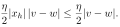
finds the largest grid risk upper bound below 0 009612708713. This is not taken as evidence for global monotonicity. For any two visibilities, a local outcome-kernel TV distance is
Searchable transcription
η
2|xh| |v −w| ≤η
2|v −w|.
History-wise coupling or telescoping across the fourteen adaptive trials therefore bounds the terminal-risk difference by 14 2. Every point of [
 1] lies within 1
 20000 of a grid point. Adding the resulting allowance 7
 00028 gives the exact certified upper bound

Searchable transcription
sup
.89≤v≤1
q(v) ≤
145990612645647230665109
14757395258967641292800000 < .009892708713 < .01.
Thus every bad device in this family, meaning 01, has
 89. This sufficient good region need not coincide with the true risk boundary. The grid cover includes every omitted visibility and every adaptive history; it makes no assumption about the reliability of a floating-point optimizer.
A stronger whole-interval risk certificate

Searchable transcription
An independent Bernstein calculation proves more than the grid cover for this frozen reader. For
v = u + (w −u)z, write each remaining-t risk polynomial in Bernstein form of degree t. A child has
degree t −1, and every local kernel is affine in z. If bi,h,k denotes the node’s coefficient, its exact
recursion is
bi,h,k = t −k
∑︂
o
Ku(o | h, ai)bjo,h,k + k
∑︂
o
Kw(o | h, ai)bjo,h,k−1,

Searchable transcription
t
t
with out-of-range terms omitted. Constant terminal errors initialize the degree-zero coefficients. The formula follows from multiplication of degree- 1 Bernstein basis polynomials by 1
 and
 ; all weights are nonnegative. Outward dyadic rounding therefore gives rigorous coefficient intervals without polynomial cancellation. The root’s four-label mean is again taken outward. For [
![u, w] = [0,](/publications/source-readout/constructive/certification-and-retained-records/math/p012-00263.svg) 1], all fourteen adjacent root coefficient pairs are strictly decreasing even after the rounding intervals are charged. The derivative identity

Searchable transcription
13
∑︂
(︄
13
k
)︄
q′(v) =
14
w −u
zk(1 −z)13−k
k=0
(bk+1 −bk)
then proves that this particular policy’s risk is strictly decreasing throughout [0 1]. It does not prove monotonicity for arbitrary frozen policies, robust policies or optimized protocol classes. The separate
 1] certificate has maximum coefficient below
 009612708713, strengthening the grid upper. The gate and misspecification figures below retain the weaker grid allowance conservatively, so they do not depend on using this sharpening.
An anytime full-record likelihood certificate
Put 9 and
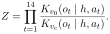
 89. After each complete experiment multiply the running statistic by its trajectory likelihood ratio
Searchable transcription
14
∏︂
Kv0(ot | h, at)
Kvc(ot | h, at).
Z =
t=1
The actual commands are predictable functions of earlier outcomes and the recorded seed. Their conditional controller probabilities cancel between the two worlds. Seed probabilities likewise cancel. A null contributes one. Declare acceptance after the first completed experiment at which the cumulative likelihood reaches 1 , with

Theorem 5.1 (Structured full-record gate). Under the stated shared-response family, the probability of ever accepting a device with is at most
 the gate accepts almost surely, with certified expected source consumption below 254746 copies. Uniformly over
 it accepts almost surely with expected source consumption below 587860 copies. Neither bound is a finite worst-case stopping budget.
Proof. For a signed projection , direct rational algebra gives the one-step likelihood multiplier expectation at actual visibility


Searchable transcription
[︃Kv0(o | h, a)
⃓⃓⃓⃓F
]︃
= 1 + η(v −vc)(v0 −vc)x2
Ev
1 −v2cx2
.
Kvc(o | h, a)
It is at most one for every . Therefore the product is a nonnegative supermartingale for all bad devices in the family. The nonnegative-supermartingale maximal inequality controls an anytime crossing by
 , even with queries restricted to full-experiment boundaries. At
 , each trial’s expected log multiplier is its conditional kernel divergence

Searchable transcription
d(a, h) = η kl
(︃1 + v0|xh|
⃦⃦⃦⃦
1 + vc|xh|
)︃
.
2
2
Bottom-up DAG expectation with the transition probabilities, followed by the four virtual-label average induced by the root seed, encloses the mean experiment log increment as

Searchable transcription
Dpath = 0.0007659246736557862 . . . .
The implementation encloses every logarithm by rational series bounds. This figure includes all source-copy consumptions, nulls and outcome-dependent commands; it is not fourteen times one independently optimized local information value. For every , the local expected log increment is at least
 ), since increasing
 increases the expectation of the log likelihood ratio. To avoid using nominal path frequencies in an unknown world, recursively define
 = 0 and

Searchable transcription
Gt(i, h) = d(ai, h) + min
o
Gt−1(ji,o, h).
The root’s uniform virtual-label average supplies the conservative uniform experiment drift lower bound  0, explicitly recorded in the exact output. This recursion remains valid for the changing distribution of histories as
 varies. Every trial’s positive log increment is at most log
 189); a whole experiment adds at most
 log
 189). Let
 log
 ). The stopped cumulative log is bounded above by
 At each finite truncated stopping time, summing conditional log drifts gives
 Monotone convergence then gives finite expectation and almost-sure acceptance. Substitution of
 or
 and multiplication by fourteen proves the stated budgets.
The risk cover leaves approximately 00010729 below the target, but no unmodelled phase or calibration error is silently charged against it: such an extension would also need to preserve or robustify the likelihood supermartingale. The present theorem assumes the displayed response law and trusted delivered commands. It does not certify arbitrary command-dependent errors or an unread residual quantum instrument.
A same-family lower bound for terminal-score validators
Take the good visibility 9 and the admitted bad alternative
 885. Exact DAG intervals give

Searchable transcription
q(.9) = .008749337644325401 . . . ,
q(.885) = .01006704807047499 . . . > .01.
Every label has the same seed-averaged risk in each world. Thus adaptive label selection, stopping and validator randomness contribute no extra information to a terminal-only transcript. The relative entropy per queried experiment is precisely kl( If a terminal-only validator has false-acceptance probability at most
 throughout this same family and acceptance probability at least
 9, the stopped chain rule and binary data processing imply

Searchable transcription
E.9[source copies] ≥14
kl(.95∥α)
kl(q(.9)∥q(.885)).
For almost-sure acceptance the numerator becomes log ). The finite-prefix proof of the earlier terminal-only change-of-measure bound applies directly; it does not require termination in the bad world. The reported exact output encloses these expressions using monotonicity in the two narrowly enclosed risks. The directed calculations give a power-
 95 terminal-only lower bound

Searchable transcription
E.9[copies] > 1992371.13869,
whereas the readable-record gate has upper bound 254745 042770. Its expected stock is therefore more than 87
 21% below the lower bound for every admitted terminal-only validator. The power-one terminal-only lower bound is 2129329
 Consequently the readable-trajectory gate beats an information lower bound for every terminal-only comparator satisfying the same physical-family promise and the same or weaker good-world power requirement. This is an information-access benefit inside a declared physical family, not merely comparison against an inefficient terminal-score test. This comparison does not transfer to the unrestricted Bernoulli validation interface of Section 3: its larger floor uses different alternatives and cannot serve as the matched comparator here.
Finite calibration deadline with certified power
Expected stopping cost alone need not supply an economical fixed calibration deadline. Here a separate exact affinity calculation gives such a deadline under the exact shared-response parent at nominal  Let
 and
 be the complete fourteen-trial transcript laws at
 9 and
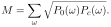
 89, with the root seed, settings and all outcomes retained. Define their affinity
Searchable transcription
√︂
M =
∑︂
P0(ω)Pc(ω).
ω
There is no exponential transcript enumeration. At a remaining- DAG node, initialize terminal affinity to one and recur as

Searchable transcription
√︂
Ht(i, h) =
∑︂
Kv0(o | h, ai)Kvc(o | h, ai)Ht−1(ji,o, h).
o
Because the root seed is retained and has the same uniform law in both worlds, the full affinity is exactly the four-virtual-label mean of the root affinities. Replacing this by the affinity after discarding the seed would generally give a different, larger value.
Dyadic square-root intervals propagate outward through this nonnegative recursion and prove

Searchable transcription
M = 0.9998070301369535 . . . < 1.
After independent complete calibration experiments at the nominal world, with
 their un-stopped full likelihood ratio,



Searchable transcription
If the likelihood gate has not crossed 1/α by experiment N, then LN < 1/α. Markov’s inequality
consequently gives
Pr
0 {not accepted by N} ≤α−1/2MN.
Directed logarithm enclosures certify that = 51440 satisfies the right-hand side at most 1
 20 for
 . Stop validation at that deadline, issuing no certificate if it has not crossed. This capped rule therefore has false-certificate size at most 2
 throughout the declared family, nominal acceptance power at least
 95, and deterministic source-copy cap

Searchable transcription
14 · 51440 = 720160.
This is more than 63 85% below the 1992371 expected copy lower bound for every terminal-only validator with the same physical-family promise and nominal power requirement. The comparison is stricter than comparing two expected upper bounds: the rich rule’s finite cap is below a universal comparator’s mean lower bound. It is not a universal optimum over richer validation methods. Independent fresh whole-experiment stock is used for the product identity. The finite-cap power result is nominal and is not silently transferred to the response-error tube below. Deadline rejection is a validation decision, not abstention in the fixed-horizon reader task. The deployment reader still returns a sign after every fourteen trials.
A controlled response-error tube
The exact response premise can be weakened in a quantified way. Permit the actual outcome kernel at every reached history to lie within TV distance of
 , for the same fixed unknown
 . The allowance holds conditionally on all previous calibration and deployment records, not merely after averaging. It must hold for each trusted label and command; it is not inferred from a few calibration settings. For an action and label, put
 ) and replace the factor by

Searchable transcription
 ̃︁fo =
fo
1 + ζ osc(f),
osc(f) = max
o
fo −min
o
fo.
The expectation of any bounded function changes by at most its oscillation times TV. Thus the corrected factor remains a supermartingale multiplier for 89. The good-visibility risk region remains safe because

Searchable transcription
qactual ≤.009892708713 + 14ζ < .009906708713 < .01.
At 9, let
 be the nominal local KL lower bound,
 its nominal kernel, and recursively define rational bounds

Searchable transcription
Wi = di −ζ osc(log f) −log[1 + ζ osc(f)] +
∑︂
o
poWjo −ζ osc(Wjo),
W0 = 0,
with logarithms rounded in the conservative direction. Induction shows this lower-bounds the conditional expected remaining corrected log likelihood against every allowed history-dependent perturbation. The
root’s four-seed mean is positive. With the same whole-experiment overshoot bound, the expected source stock is below 
This bound allows predictable kernel perturbations; no fresh independence of those perturbations is assumed. The original exact worlds are contained in the enlarged tube, so the same 1992371 terminal-only lower bound still applies to any validator required to control the tube family. At the exact nominal good device, which is included in the tube, this provides a matched stock separation even when validity is required over the enlarged model. The same terminal-only lower bound is not asserted separately at every perturbed good device. No optimality over tube models is asserted.
Deployment, resources and limitations
The evaluator needs one trusted source label, a fresh uniform two-bit reader seed per whole experiment, access to all commanded actions and outcomes, and exact or conservative log-likelihood accumulation. Its own acceptance controller is outside the fourteen-copy deployment reader. Counting fourteen source preparations per observation already includes nulls and every complete experiment; history extraction, arithmetic, references, source readiness, reset and clock resources remain additional. Finite worst-case counters and elapsed time are not bounded by this expectation theorem. The reported cost bounds concern the defined exact likelihood crossing. Here its rational kernel ratios permit an exact product and threshold comparison. A conservative approximate log accumulator can preserve false-certificate control, but retaining the same acceptance and cost bounds requires charging its rounding or drift loss separately. The policy is frozen before calibration. Selecting it using the same records would require a selection-valid uniform gate or fresh validation. If acceptance has probability ), the usual joint deployment-error statement is
 error
 under the stability contract. An unqualified conditional-on-acceptance
 01 guarantee does not follow without an acceptance-probability allowance. The gate verifies a task-relative risk implication within the trusted physical family, not the family itself, a Born-selection mechanism or a unique source ontology.